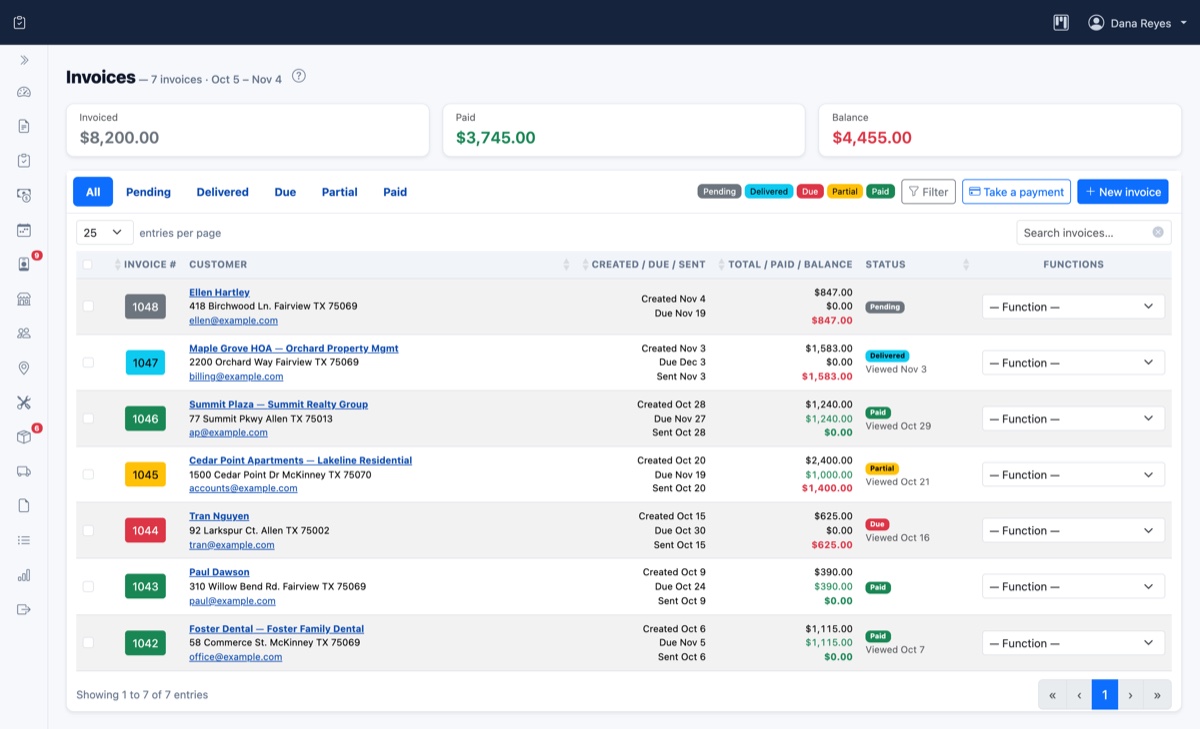
Field service invoicing is the last step of every job, and the one most likely to get pushed aside. The crew has moved on and the office is busy with tomorrow, so a finished job can sit for days before anyone bills it. Meanwhile, you've already paid for the labor and materials. Every day of delay is a day you're funding that customer's job yourself.
Getting paid on time rarely depends on one clever trick. It comes from a short routine: bill soon after the work is done, make the invoice easy to understand, make it easy to pay, and follow up on a schedule. This guide walks through each of those steps.
What a field service invoice should include
A clear invoice answers the customer's questions before they have a reason to delay payment. Include:
- Your business details: your company name, contact information and any license number you're required to show.
- An invoice number and date: a unique number makes every payment and conversation easier to track.
- The customer and the service address: show both if the person paying isn't at the job site, as with a property manager.
- What you did: list each service and the materials used, with quantities and prices, in words the customer will recognize.
- The date of the work: this helps the customer match the bill to the visit.
- Subtotal, tax and total: whether services are taxable varies by state and by the type of work, so confirm how the rules apply to you.
- Deposits and payments received: show them clearly, along with the balance due.
- The due date and how to pay: give an actual date, plus every payment method you accept.
Commercial customers may also need a purchase order number or a specific contact on the invoice. Ask when you take the job. A missing PO number can leave an invoice sitting unpaid in someone's accounts payable queue.
Invoice as soon as the job is done
The easiest way to get paid sooner is to bill sooner. If payment is due 30 days after the invoice date and you send the invoice two weeks late, your customer effectively has 44 days to pay. The customer also remembers the good work better on the day it was finished than after two weeks.
Prompt billing depends on good job records. When the hours, materials and approved changes are already on a complete field service work order, the office can turn it into an invoice without chasing the crew for details. Set a clear target, such as invoicing every job by the end of the next business day.
Then close the gaps. Once a week, list every finished job that hasn't been billed. An unbilled work report does this automatically, but you can also filter a spreadsheet by status. Anything still on that list after a week needs an explanation.
Choose payment terms that fit the customer
Your terms should be set before the work starts, ideally on the estimate, so the invoice holds no surprises. Most service businesses choose from a few common options:
- Due on receipt: a common choice for homeowners and small, one-time jobs.
- Net 15 or Net 30: payment is due 15 or 30 days after the invoice date. Commercial customers often expect these terms.
- Deposit plus balance: useful for larger jobs and those with expensive materials, since the deposit covers some of your costs up front. Keep careful track of the money. Account credit records show what each customer has paid and where it was applied.
- Progress payments: for long jobs, bill at set milestones rather than carrying all the cost until the end.
- Automatic payment: for recurring work, keep a card on file with the customer's written authorization and charge it on a set schedule.
Longer terms are a form of credit. It's reasonable to run a credit check or ask for a deposit before you extend them to a new customer on a large job. If you want to charge late fees, state them in the agreement ahead of time and check whether your state limits them.
Make it easy to pay
Every extra step gives a busy customer a reason to put the invoice aside. A few changes can remove those steps:
- Take cards and bank payments online. A pay button in the invoice email lets the customer finish the job in a minute. Online payments can also record the payment against the invoice for you.
- Collect on site when it makes sense. Homeowners are often home when the job finishes, so a crew lead can present the invoice and take payment on the spot.
- Keep accepting checks if customers want to. Print the mailing address and who to make the check out to on the invoice.
- Send it to the right person. Confirm who actually pays the bills, especially for property managers and commercial accounts.
Card processing has a cost, so build it into your prices. If you're thinking about passing the fee on to customers, check your processor's rules and your state's law first.
A simple follow-up schedule
Many late payments are simple oversights, so a friendly, predictable reminder often solves the problem. Consider a schedule like this, and adjust it to fit your customers:
- A few days before the due date: send a short, polite reminder with the amount, the due date and a payment link.
- The day after the due date: send the invoice again and ask whether there's a problem with it.
- One to two weeks late: call. A conversation can reveal a dispute, a lost invoice or a cash problem that an email won't.
- 30 days late: speak with the decision-maker, agree on a specific payment date and confirm it in writing. Consider pausing new work until the account is current.
- 60 to 90 days late: send a formal final notice and decide on your next step.
If a customer disputes part of a bill, ask them to pay the undisputed amount while you sort out the rest. Your work order, photos and signed change orders are your evidence, so keep them with the invoice.
When an invoice won't get paid
At some point, the cost of chasing a debt can exceed what you're likely to recover. Your remaining options usually include a payment plan, small claims court, a collection agency or a write-off. Depending on your trade and state, you may also have lien rights, but those can come with strict deadlines, so get legal advice early.
If you use a collection agency, choose a reputable one. The FTC explains that the federal Fair Debt Collection Practices Act bars debt collectors from abusive, unfair or deceptive practices when collecting household debts. Business debts aren't covered by that law, though other rules may apply.
How unpaid invoices affect your taxes
Your accounting method determines when an invoice affects your taxes. According to IRS Publication 538, under the cash method you generally report income in the year you receive it. Under the accrual method, you generally report it in the year you earn it, whenever payment arrives.
That also affects write-offs. The IRS says you can generally deduct a bad debt only if you previously included the amount in your income, so a cash method business generally can't deduct an unpaid fee it never reported. Ask your accountant how this applies to you.
The numbers to watch
You don't need a complicated report to see whether your billing is healthy. Check these regularly:
- Days to invoice: the time from finishing a job to sending the bill. This one is entirely in your control.
- Days to get paid: the time from sending the invoice to receiving payment.
- Aging: the total you're owed, grouped as current, 1 to 30, 31 to 60 and over 60 days late. Older balances generally get harder to collect, so start your calls there.
- Unbilled work: the value of finished jobs without an invoice.
- Repeat late payers: customers who pay late every time may need different terms or a deposit.
Common invoicing mistakes
- Batching invoices for the end of the week or month. Every job in the batch gets paid later than it needed to.
- Writing vague line items. "Labor and materials: $2,400" invites questions and slows approval.
- Forgetting materials and extras. If they never reached the work order, they're unlikely to reach the invoice.
- Sending it to the wrong person. An invoice can sit for weeks in the wrong inbox.
- Having no reminder routine. When follow-up happens only when someone has time, it rarely happens.
- Losing track of partial payments. Without clear records, you may bill a customer twice or forget a balance.
When field service invoicing outgrows spreadsheets
A word processor and a spreadsheet can work for a handful of invoices a month. It's probably time for invoicing software when you're retyping job details, losing track of who has paid or spending hours on reminders. Look for a system that creates the invoice from the finished job and shows each invoice's status at a glance.
See how CommandForce handles invoices, including one-click billing from work orders, online payment and reminders, or start free.
Frequently asked questions
When should I send an invoice for a field service job?
Send it as soon as you can after the work is finished, ideally the same or next business day. Payment terms usually run from the invoice date, so a late invoice means you wait longer to be paid.
What payment terms should a service business use?
Due on receipt is common for homeowners and small jobs, while commercial customers often expect Net 15 or Net 30. Larger jobs may call for a deposit or progress payments. Agree on the terms before the work starts.
What should I do when a customer does not pay an invoice?
Start with a friendly reminder, then call to find out whether there is a problem. If the invoice stays unpaid, agree on a specific payment date, send a final notice and then consider your options, such as a payment plan, small claims court or a collection agency.